ENVIRONMENTAL SUSTAINABILITY
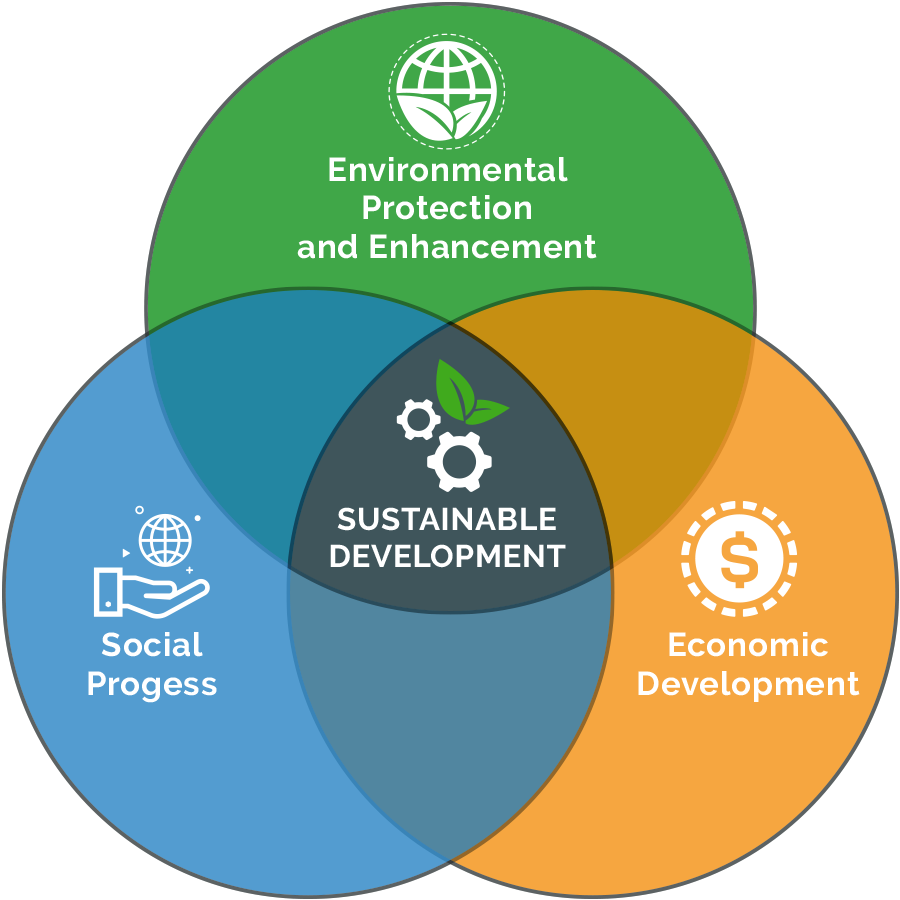
Environmental sustainability focuses on protecting natural resources and ecosystems while ensuring that development activities do not cause irreversible damage. This includes conserving biodiversity, reducing pollution, using renewable energy, and managing waste responsibly.
KEY PRACTICES
Transition to renewable energy (solar, wind, hydro)
Conservation of forests, water bodies, and wildlife
Promoting circular economy and recycling
Reducing carbon emissions and pollution
ECONOMIC SUSTAINABILITY
Economic sustainability aims to support long-term economic growth without negatively impacting social or environmental systems. It encourages efficient resource use, innovation, green jobs, and inclusive economic opportunities.
KEY PRACTICES
Green industries and sustainable businesses
Responsible production and consumption
Long-term planning and investment
Fair trade and ethical supply chains
SOCIAL SUSTAINABILITY
Social sustainability emphasizes equity, inclusion, and the well-being of all people. It focuses on access to education, healthcare, gender equality, decent work, and social justice.
KEY PRACTICES
Quality education and skill development
Gender equality and empowerment
Access to healthcare and sanitation
Community participation and social justice